

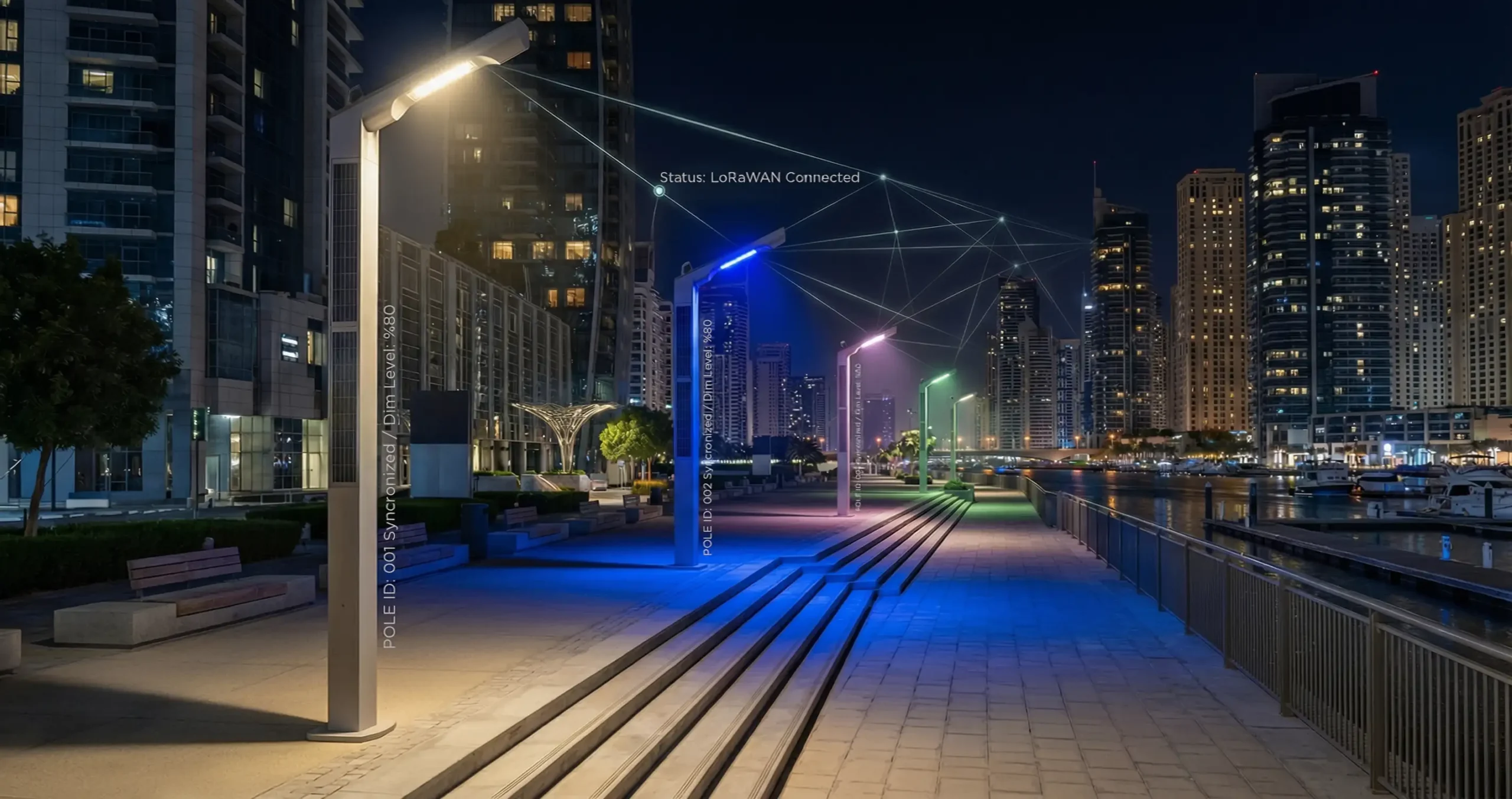
Adaptive Dimming: Maximizing ROI in UK Smart Cities
Adaptive Dimming: Maximizing ROI in UK Smart Cities
What is adaptive dimming in street lighting? Adaptive dimming utilizes motion sensors, radar, and D4i-compliant LED drivers to dynamically adjust street light illumination levels based on real-time pedestrian and vehicular traffic. This intelligent technology can reduce municipal energy expenditure by over 60% while maintaining full compliance with BS EN 13201 safety standards.
Introduction
With energy prices fluctuating and local councils facing strict budget constraints, optimizing infrastructure expenditure is a top priority across the UK. While upgrading legacy high-pressure sodium (HPS) lamps to LED provides an immediate reduction in energy consumption, it is only the first step. To truly future-proof urban infrastructure and maximize Return on Investment (ROI), local authorities are turning to adaptive dimming.
Moving Beyond Fixed Schedules with Adaptive Dimming
Traditional street lighting operates on a binary or rigid schedule—lights turn on at dusk, perhaps dim slightly at midnight, and turn off at dawn. However, urban traffic is rarely this predictable. An empty industrial estate at 3:00 AM does not require the same lux levels as a bustling city centre. Adaptive dimming replaces these static schedules with dynamic, sensor-driven illumination.
The Role of D4i and Zhaga in Adaptive Dimming
The foundation of effective adaptive lighting is the D4i standard. When a luminaire is equipped with a D4i-certified driver and a Zhaga Book 18 socket, it creates a seamless plug-and-play environment for advanced sensors.
- Precision Control: D4i drivers allow for incredibly smooth, flicker-free dimming down to precise percentages.
- Real-time Data: These drivers report accurate energy consumption data back to the Central Management System (CMS), allowing councils to calculate their exact financial savings day by day.
Integrating PIR (Passive Infrared) or microwave radar sensors via these compact Zhaga nodes—perfectly suited for sleek, architectural columns like the Sega and Qubo smart poles—ensures the technology remains visually unobtrusive.
Safety First: BS EN 13201 Compliance
A common misconception is that dimming compromises public safety. In reality, adaptive systems enhance it. When a vehicle or pedestrian is detected, the streetlights instantly ramp up to 100% illumination, creating a “bubble of light” that travels with the user. This ensures maximum visibility exactly when and where it is needed, remaining fully compliant with the UK’s BS EN 13201 road lighting standards.
Centralized Management with OptoOS
To harvest the full ROI of adaptive dimming, the hardware must be backed by intelligent software. Platforms like OptoOS allow infrastructure managers to set complex dimming profiles, monitor sensor health, and generate automated carbon reduction reports from a single dashboard.
Conclusion
Adaptive dimming transforms streetlights from static energy drains into highly responsive smart city assets. By deploying sensor-ready luminaires and intelligent CMS software, UK councils can slash their energy bills by an additional 60% post-LED conversion, ensuring a rapid ROI and a greener urban environment.