

Zhaga vs NEMA: UK Smart Street Lighting Guide
Zhaga vs NEMA: UK Smart Street Lighting Guide
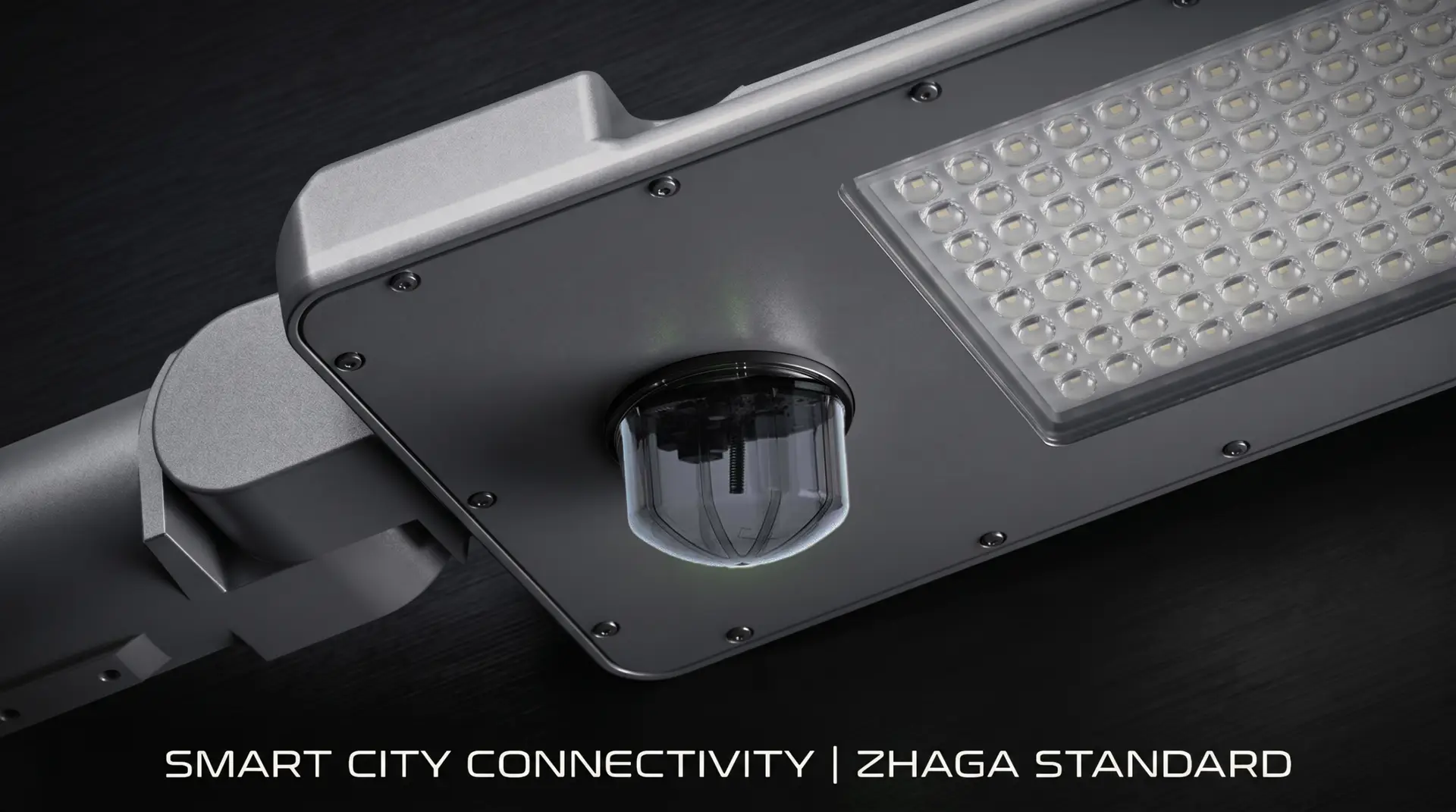
What is the difference between Zhaga and NEMA sockets for street lighting? NEMA 7-pin is the traditional standard using mains AC voltage. However, this requires larger controllers. Zhaga Book 18 is the newer European standard operating on 24V DC. Consequently, Zhaga integrates with D4i protocols to offer superior reliability and smaller footprints for smart city networks.
Introduction
Across the UK, local authorities are accelerating their transition to smart street lighting. Therefore, they can meet aggressive Net Zero targets. Upgrading to connected LED systems reduces carbon emissions significantly. Furthermore, it saves councils millions in energy and maintenance costs. However, evaluating zhaga vs nema standards is crucial when upgrading municipal infrastructure. Ultimately, this choice determines the long-term ROI and interoperability of the entire network.
The Legacy of the NEMA Standard
The NEMA receptacle has been the prevailing standard in the US and the UK for decades. Typically, these nodes handle high-voltage mains power. In fact, they use a 3-pin, 5-pin, or 7-pin locking connection mounted on top of the luminaire.
While highly established and robust, NEMA controllers require built-in AC/DC conversion. Consequently, this increases the internal component count. This results in a larger physical footprint on top of the pole. As a result, it can theoretically reduce long-term reliability compared to lower-voltage alternatives.
The Core Differences: Zhaga vs NEMA
Originating in Europe, the Zhaga Book 18 socket is rapidly gaining popularity. Indeed, it is becoming the de facto standard for modern smart city ecosystems.
- Compact & Aesthetic: First, Zhaga operates on a 24V DC supply directly from the LED driver. Therefore, the controllers do not require an AC/DC converter. This allows the node to be significantly smaller. Consequently, it preserves the sleek design of architectural luminaires like our Sega and Qubo smart poles.
- D4i Data Standardisation: Second, Zhaga sockets pair seamlessly with the D4i standard. This protocol provides a rigid framework for data points, energy metering, and fault alerts. Because of this, council engineers receive the exact same data formats. Importantly, this remains true regardless of which sensor manufacturer they use.
Preventing Vendor Lock-in with Open Ecosystems
The primary concern for infrastructure engineers is avoiding proprietary systems. Specifically, they want to avoid vendor lock-in for 20 years. By specifying universal sockets, municipalities easily maintain an open ecosystem. As a result, they retain the freedom to plug in RF Mesh or LoRaWAN modules. Furthermore, they can integrate the hardware with flexible Central Management Systems like OptoOS.
Architectural Integration: The Smart Pole Advantage
For modern urban projects, the visual impact of lighting infrastructure is highly important. Similarly, its technological capability is crucial. Bulky legacy nodes can easily ruin the skyline of a newly developed public square. Instead, town planners can leverage the compact nature of Zhaga sockets. By using streamlined columns like the Sega and Qubo models, they can deploy advanced AI cameras and traffic sensors. Most importantly, they achieve this without creating visual clutter.
Conclusion
Whether upgrading a dense London borough or a coastal highway network, preparation is key. Making the right zhaga vs nema choice ensures your lighting assets remain future-proof. By insisting on open-standard receptacles, UK councils can confidently deploy smart dimming schedules. In addition, they can automate fault detection. Ultimately, they will lay the physical groundwork for the next generation of smart city IoT.